Using an external display
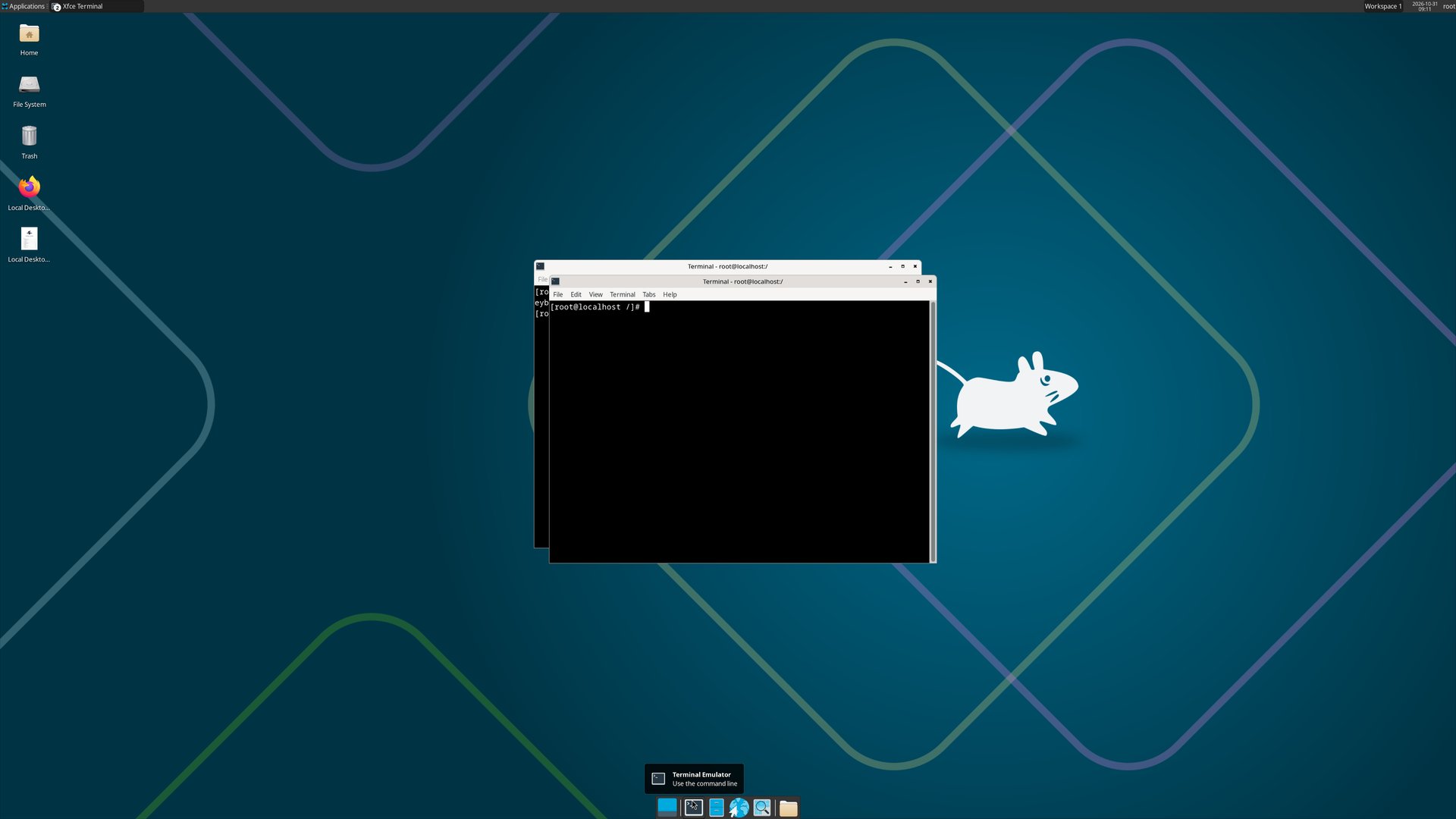
Connect your phone to a monitor or a TV while Local Desktop is open, and the Linux desktop moves to the big screen. Your phone's screen becomes a trackpad, like Samsung DeX. This works on any phone that can send video out, not only on phones with a desktop mode.
What you need
- A phone that supports video output over USB-C (DisplayPort Alt Mode). Most flagship phones do, but many budget and mid-range phones don't. If your phone shows its own screen on the monitor when you plug it in, it works.
- A USB-C to HDMI cable or adapter, a USB-C dock, or a USB-C monitor. A wireless display (Miracast) also works.
- A keyboard and a mouse are optional, but they make a big difference. A USB dock lets you plug in both, and charge the phone at the same time.
Connect
- Open Local Desktop on your phone.
- Plug in the monitor.
The desktop appears on the monitor, at the monitor's resolution, and you will see "The desktop is on the external display. Use this screen as a trackpad." on your phone. Unplug the monitor, and the desktop comes back to the phone screen.
The desktop also scales its text and buttons to the monitor's density, so a 4K monitor doesn't give you tiny text.
On Samsung phones, DeX may start instead. Pull down the notification shade and choose Screen mirroring instead of DeX, or turn off Auto start when HDMI is connected in the DeX settings.
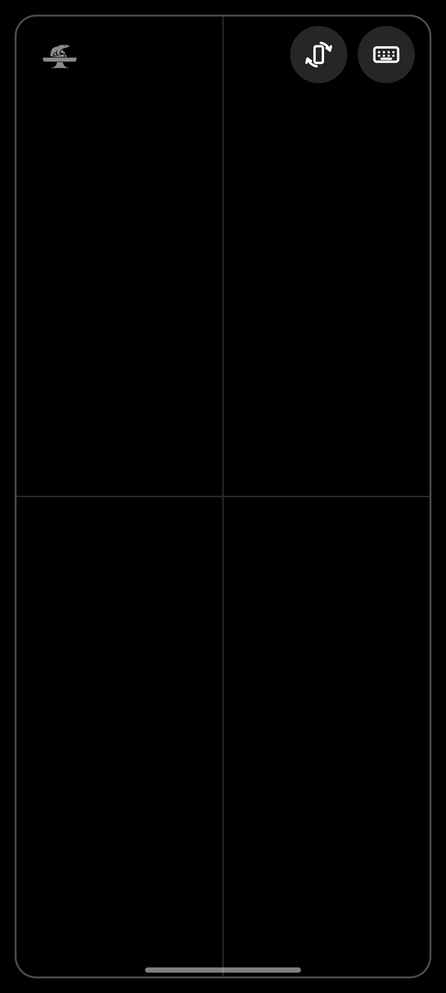
Trackpad gestures
| Gesture | Does |
|---|---|
| Slide one finger | Move the cursor |
| Tap | Left click |
| Tap with two fingers | Right click |
| Tap with three fingers | Middle click (paste on Linux) |
| Slide two fingers | Scroll |
| Touch and hold, then slide | Drag (hold the left button) |
| Touch and hold, then lift | Right click |
The Local Desktop bear in the top left corner shows which way is up, so you can hold the phone however you like.
Buttons
Two buttons sit in the top right corner of the trackpad:
- Rotate screen turns the trackpad (and the Android keyboard) a quarter turn clockwise. It's useful when you lay the phone sideways on the desk and auto-rotate keeps it upright.
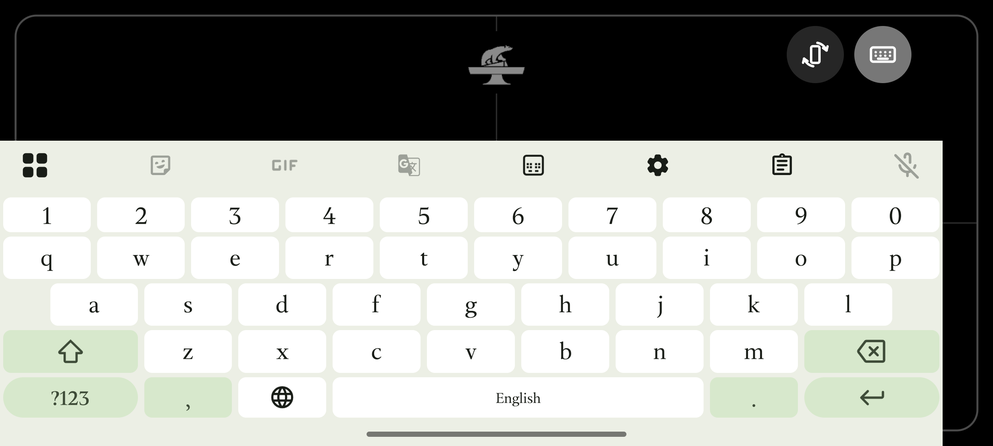
- Keyboard opens the Android keyboard on the phone, and what you type goes to the desktop. It also opens by itself when you click a text field on the desktop.
Mouse, keyboard and touch screen monitors
- A mouse connected to the phone moves the cursor on the monitor, and its buttons and wheel work there.
- A physical keyboard types into the desktop. To get
Alt+Taband theMetakey, see Using a physical keyboard. - If your monitor has a touch screen, or you use a pen on it, touching it clicks where you touch.
In the background
You can switch to another app on the phone, and the desktop stays on the monitor. Sound keeps playing too. A mouse or keyboard keeps working on the monitor, if Android lets the mouse pointer onto it. Come back to Local Desktop to use the trackpad again.
This makes a nice setup: watch a video or reply to a message on the phone, while a long build runs on the big screen.